The In-Vehicle Audio Landscape in 2026
Every week in our automotive sound shop, customers ask the exact same question: "Dave, I already pay for Spotify and Apple Music on my smartphone. Why should I keep paying for a SiriusXM subscription in my dashboard?"
It is a fair question. With unlimited wireless carrier data plans and dashboard phone mirroring via Apple CarPlay and Android Auto, relying on your phone seems like a no-brainer. But after twenty-two years of outfitting everything from cross-country long-haul commercial rigs to family SUVs, I can tell you that mobile streaming and dedicated SiriusXM satellite radio are fundamentally different animals designed for entirely different driving realities.
When you are commuting fifteen minutes in downtown Chicago or suburban Dallas, Spotify or Apple Music feels effortless. But the moment your tires roll across state lines, into national parks, through mountain passes, or onto offshore coastal waters, the reality of terrestrial wireless networks hits hard.
To give you an honest, unvarnished look at how these platforms stack up behind the wheel, we benchmarked SiriusXM against the five biggest streaming apps: Spotify, Apple Music, Pandora, Amazon Music, and TuneIn.
Side-by-Side In-Vehicle Comparison Matrix
Here is how the top services compare across the metrics that actually matter when operating a motor vehicle at 70 mph:
1. Cellular Dead Zones: Where Terrestrial Streaming Dies
The fundamental engineering flaw of cellular-based streaming platforms (Spotify, Apple Music, Amazon Music, Pandora, TuneIn) is their dependence on terrestrial cellular towers.
Cell towers are spaced according to human population density, not highway lane miles. In dense metropolitan zones, you have seamless 5G coverage. But the moment you venture onto interstate corridors like I-10 through West Texas, I-70 through central Utah, I-80 through Wyoming, or scenic routes like the Blue Ridge Parkway, cell towers sit miles apart.
When your smartphone encounters a cell tower handoff failure, your music stream stops dead in its tracks. You are left with an irritating spinning loading circle on your touchscreen. Even worse, if you tap "skip track" while in an edge-case 1-bar coverage area, Spotify and Apple Music will freeze completely as they timeout trying to contact authentication servers.
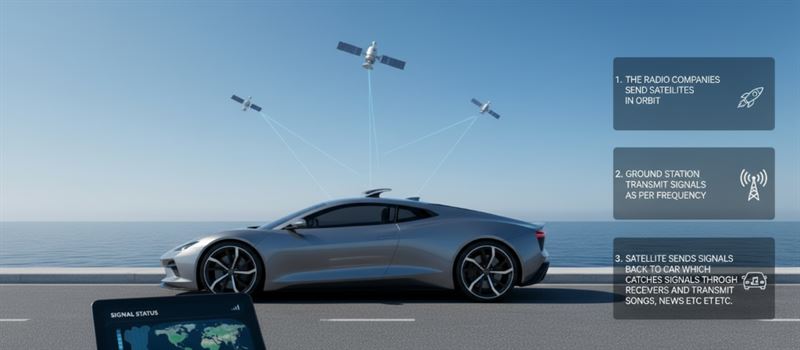
How SiriusXM Solves This: SiriusXM transmits directly from geostationary satellites stationed 22,236 miles above the equator. Because their orbital footprint blankets the entire contiguous United States, southern Canada, and coastal ocean waters, SiriusXM delivers identical, static-free digital audio whether you are driving down 5th Avenue in Manhattan or crawling through the remote backcountry of Yellowstone National Park. There are no cell towers to drop and no handoff drops.
2. Cellular Data Caps & Device Thermal Throttling
Many drivers believe they have "unlimited" cellular data. What wireless carriers bury in their fine print is that most unlimited plans enforce deprioritization thresholds (often at 30 GB or 50 GB per billing cycle).
Furthermore, running wireless Apple CarPlay or Android Auto while simultaneously streaming music and pulling GPS navigation creates substantial internal heat inside modern smartphones. On hot summer days, placing a phone on a wireless charging pad while streaming Spotify will frequently cause an iPhone or Android device to display a black screen with an "iPhone Needs to Cool Down" thermal shutdown alert.
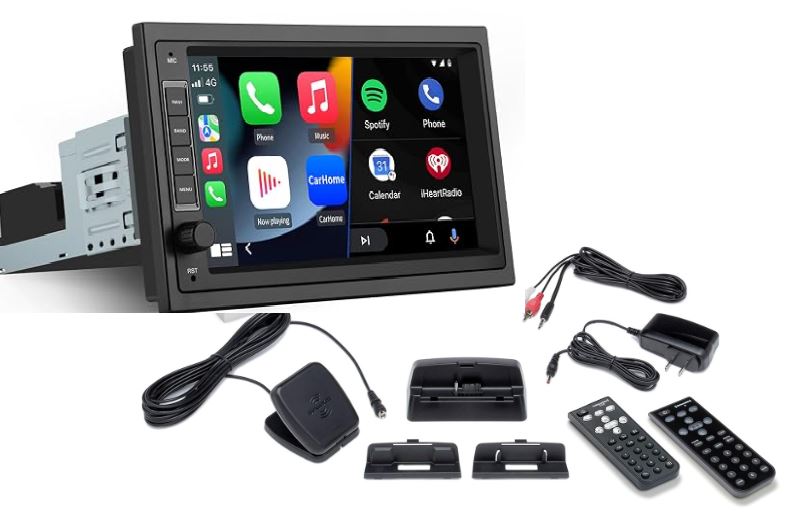
The SiriusXM Advantage: SiriusXM hardware operates entirely off your automobile's 12-volt electrical system and factory roof antenna. A dedicated SiriusXM tuner (such as the in-dash SXV300V1 module) uses exactly zero megabytes of mobile phone data and generates zero heat in your pocket. Your phone remains cool, fully charged, and available for emergency calls.
3. Live Sports Play-by-Play: The Ultimate SiriusXM Moat
If you are a passionate sports enthusiast, there is zero contest between SiriusXM and streaming music apps.
On platforms like Spotify, Apple Music, and Pandora, live play-by-play broadcasts are virtually nonexistent. If your hometown baseball team is playing an afternoon road game while you are stuck in bumper-to-bumper traffic, you cannot tune into the live broadcast on Spotify. You are forced to pay for a separate sports app subscription, navigate awkward interfaces, and hope your cell connection does not drop during the bottom of the ninth inning.
What SiriusXM Delivers:
You simply spin your dashboard dial to the designated channel and listen to your team's authentic hometown announcers without regional blackout restrictions.
4. Human Curation vs. Algorithmic Echo Chambers
Have you ever noticed that after listening to a Pandora "thumbs-up" radio station or a Spotify Daily Mix for three weeks, you begin hearing the exact same forty tracks in slightly scrambled sequence?
That is algorithmic fatigue. Streaming algorithms are mathematical models designed to minimize skip rates. They feed you songs with similar BPM, harmonic keys, and listening histories, inadvertently trapping you in an acoustic echo chamber.
The SiriusXM Difference: SiriusXM programming is steered by veteran music directors, on-air radio personalities, and legendary artists who genuinely live and breathe the music they broadcast:
5. Sound Quality: The Honest Installer's Assessment
Let's address sound quality with complete technical transparency.
If you are parked in your driveway with the engine off, listening through a high-end $4,000 audiophile aftermarket sound system, a lossless 24-bit / 96 kHz stream from Apple Music or Amazon Music HD over a direct USB-DAC cable will sound noticeably more dynamic, with wider stereo separation and extended acoustic headroom than satellite radio.
Because SiriusXM must broadcast hundreds of concurrent channels across a licensed 25 MHz spectrum allocation, satellite audio packets utilize aggressive psychoacoustic compression (equivalent to roughly 48 kbps to 64 kbps MP3 depending on channel priority).
However, when driving on the highway at 70 mph, vehicle cabin ambient noise levels (tire hum, wind buffeting, engine vibration) typically sit between 68 and 74 decibels. In that noisy acoustic environment, the subtle nuances of 24-bit lossless streaming are completely masked by road noise. SiriusXM's broadcast processing applies custom multi-band leveling and equalization tailored specifically to cut cleanly through vehicular cabin noise floors, delivering punchy bass and crystal-clear spoken dialogue.
The Final Verdict: Which Service Fits Your Driving Needs?
Need Help Upgrading or Verifying Your Vehicle's SiriusXM Setup?
If your car stereo did not come with SiriusXM from the dealership, or if you need help choosing between a factory SXV300 integration kit or a standalone receiver, speak directly with our automotive audio specialists at 1-855-666-6137.
Looking for a specific solution? Our Experts can point you in the right direction.
Need an exact FAKRA antenna pinout, marine chartplotter radar integration, avionics SoftMute wiring, or help troubleshooting an persistent "Acquiring Signal" fault? Our technical desk is ready to help.